Economy
The chapter includes :
Electricity
Water
Oil
Gas
Petrochemical industry
Atomic Energy
Communications Telecommunications
The Post
Roads
Railway and ground transportation
Air transportation
Sea transportation
Agriculture
Animal Husbandry
Shilat ( Fisheries)
Electricity
During the post-war economic restructuring era and the first "five year Development Plan", remarkable development occurred in Irans electricity industry. Information and statistics show that most of the plans targets, such as reconstruction and renovation of power plants damaged during the "Sacred Defense " years (Imposed War), expansion of existing capacities, sitting up new facilities and extension of hydroelectric power plants were all realized.
Water
International Commission for Dam-making has introduced Iran as the third country surpassed only by Japan and China in the production of dams with the a height of more than a hundred meters. A total of 13 dams were constructed in Iran from 1957 to 1978. Given the S dams built during the post revolutionary years up to 1988 the number of reservoir dams built in a 30-year period reached 18.
During a 6 year period when the first and second development plans were launched (from 1989 to 1994) a total of 10 new days became operational and have played a key role in meeting the countrys needs for water.
The overall performance of the water sector in recent years shows the high efficiency of main factors of production, namely capital, instruments and manpower, and optimal utilization of facilities through construction of dams. This indicates the optimal use of the existing facilities and capacities in this sector of the Iranian economy. The favorable impacts of such measures on development of agriculture in various parts of the country is eye-catching and heralds a bright prospect for this sector in future.
Oil
Irans 100-year-old oil industry is its leading economic sector. It supplies approximately 96% of the countrys energy needs and is equipped with one of the most unified and consolidated administrative and managerial structures in the country. More important, this industry is the main source of foreign exchange needed for the implementation of major infrastructure and development projects. Any change in this sector will, therefore, have a direct impact on the Gross National Product and any increase in oil production will result in a corresponding increase in economic growth.
The oil industry produces a high value added so that for each person employed in the oil sector. 11 positions are created in other sectors of the economy. To further underscore the key role played by oil in Irans economy, it should be noted that from the time of the victory of the Islamic Revolution in Iran in 1979 until March 1996. $250 billion was netted from the export of oil. From 1988 through 1995 the Iranian oil industry underwent drastic qualitative and quantitative changes. When the guns were silenced in the eight year Iraqi Imposed War (1980-88), many international observers doubted that the Islamic Republic of Iran would be able to repair the damage sustained by its oil industry and resume production within a short period of time relying merely on the knowledge and ability of domestic manpower. However, during the eight years of the reconstruction campaign, refineries, oil export installations and pipelines were rehabilitated. Today, the Iranian oil industry is able to produce about 4 million barrels of oil per day for export and local consumption, 160 million m3 of natural gas for refining and local consumption, and supply the market with over 10 million tons of petrochemicals and chemical fertilizers annually, from 12 plants, for local use and export.
Production and Export of Iranian Crude oil in the construction Era
(1000 bpd)
|
Description |
Production |
Export |
|
1988 |
2557 |
1916 |
|
1989 |
2947 |
1823 |
|
1990 |
3231 |
2224 |
|
1991 |
3366 |
2460 |
|
1992 |
3489 |
2409 |
|
1993 |
3609 |
2189 |
|
1994 |
3603 |
2220 |
|
1995 |
3612 |
2290 |
|
mid-96 |
3595 |
2600 |
The most important projects carried out as regards production of oil and oil products are as follows:
1. Reconstruction of Abadan refinery.
2. Construction of Arak seventh refinery.
3. Construction of Bandar-Abbass refinery.
4. Performance of drilling operations in the oil fields
5. Reconstruction of oil plants in Persian Gulf
6. Establishment of Esfahan oil making plant and performing gas injection projects.
7. Performing drilling operations in the oil fields of Caspian Sea, getting benefit from the cooperation of the international companies.
Gas
The Islamic Republic of Iran is second in the world having about 21 trillion cubic meters of gas reserves (15 % of the proven gas reserves of the world). The gas reserves will meet the countrys demands for about the next 300 years.
A study shows that if oil is replaced with gas, air pollution will be reduced by 70 % while export of natural gas will fetch a remarkable amount of hard currency. Given the above factors, since the victory of the Islamic Revolution, officials have given priority to the realization of the following objectives :
I. Supplying natural gas to industries and power plants through the country and its further consumption in the transportation network.
2. Providing cities and villages with gas.
3. Replacing other sources of energy with gas aiming at preserving oil reserves.
4. Exporting natural gas.
Following the 1979 victory of the Islamic Revolution and up to 19881, great strides have been taken in Iran for the exploitation and consumption of natural gas. However, due to the outbreak of the imposed war and the heavy damage inflicted on gas installations, as well as the economic sanctions and insufficient funding, targets have yet to be realized.
In the period from 1988-1995 a main objective of the government was to increase the share of natural gas used to meet the countrys energy demands. Therefore, extensive measures have been taken to achieve this goal. Due to efforts made by the government, the share of the countrys energy consumption in gas usage increased from 5.5% in the early stages of the revolution to 36 y. in 1995. The portion of energy needs of industry met by natural gas rose to 44% and power plants used 55.2% in 1993 at the end of the first "Five year Development plan".
It was through the construction of refineries such as Valye-Asr and Sarkhoon that the capacity of refining has increased by 9% from 1979 to 1995. The expansion of the major gas pipe lines and increasing the number of cities supplied with gas, increasing the number of power Stations and gas consuming industries and expansion of consumption rate of natural gas are some other examples of the projects carried out in the construction era.
Natural Gas Export
After Irans gas export to the former Soviet Union was halted in 1979, the export of natural gas was virtually suspended until the last few years. Now in the light of the increase in extraction of natural gas, as well as the extension of the gas pipeline, the possibilities of exporting natural gas has once again been created. In this connection, after lengthy discussions between Iran and Turkey, a contract has been concluded for the transfer of Iranian gas beginning in 1998. The agreement between the two countries will be launched with the transfer of 2 billion m3 of gas to Turkey annually increasing to 81 billion in 2001.
Petrochemical Industry
The commissioning of the Marvdasht chemical fertilizer plant in 1958-59 marked the start of the Petrochemical industry in Iran. From the time up to 1978, about $2.4 billion were interested in this sector. At the time when the petrochemical industry in the world was undergoing rapid development, Iran missed many opportunities in this connection due to a lack of access to the required technical know-how and to the policies of an anti-populist regime. The decade beginning 1978 is known as the ears of stagnation" for the petrochemical industry in Iran Since many petrochemical units were located in the war zone and were exposed to direct enemy fire, production was reduced to the minimum level possible.
Operations at Bandar Imam Petrochemical complex were suspended for this reason. However, within this period and despite the economic sanctions, certain unfinished projects including plans for the extension of Shiraz Petrochemical complex were completed with the help of coal resources. The period of 1988-96 was the era of the era of the flourishing of the Petrochemical industry in Iran. In total, 8761 billion rails have been invested in the Petrochemical industry from 1989 to 1996 boosting the value of the products of this sector to over 50 20 billion rails. The amount of investment in the petrochemical industry is expected to reach about 9000 billion rails in the second " Five year Development plan".
Atomic Energy
Making use of the nuclear energy is not solely limited to conversion of the atomic Energy to electricity, Nuclear energy is now applied many other different field such industry, agriculture and medicine. That is why the nuclear energy is regarded as one of the essential elements of technological development. Yet, the public opinion and the propaganda usually confuse the peaceful use of nuclear energy with its use in the unclear stations.
The construction of Boushehr nuclear station, the contract of which had been signed before the revolution, had reached a half for a while in the post revolution era. The operation had also stopped because of the imposed was and the air raids against it. The improvement of the plant came as an important part of achieving the nuclear technology aimed at bringing comfortable life for the people. The complementary process of the development of the station is still continuing as scheduled.
Apart from developing nuclear station, the Iranian Atomic Energy organization, has also tried to perform some practical projects on the field of nuclear Energy some of the projects carried out in this era are as follows:
Communications
Telecommunications
We can realize the magnitude of the work accomplished in Iran in the telecom sector during the past eight year of construction by observing its performance. During this period telecom, in addition to expanding rapidly in the country, transcended the borders of Iran through development of international communications. While enabling the general public to benefit at an increasing rate from the blessings of telecom, and on account of its rapid growth within the scope of international communications, is performance and transformations have been termed by reputable foreign publications as "the telecom outburst in Iran".
The number of cities and towns which lacked telecom facilities at the beginning of the construction period and which enjoyed such facilities in the course of the period exceeded 12,000 by 1996.
The inter-city automatic channels (STD) established during the first few years after revolution averaged 500. This number increased to 136860 in 1994.
The number of villages which gained access to telecom facilities during the eight years of construction reached 12000 by 1996.
The number of telephone subscribers was 1.8 million in 1988 which increased to 5.8 million in 1996.
The number of public phones rose from 11,770 units in 1988 and in the course of the construction period, to 63732 in 1996.
The number of the international conversation increased from 15% in 1989 to more than 48 %. The number of the international channels, too, has risen to 3663 in 1996.
In the pre-revolution era and in the first years of construction period no effective measures had been taken to improve the Mobile phones in the country, yet, in 1995 the Data Transfer Network enjoyed 11260 X-25 switches and 12,000 people could use the mobile facilities.
The establishment of Iran Data communication company counts as the most important action taken to improve the telecomm network and transfer of the data . All the organizations can easily connect their computer systems to the other networks in the useful information through the Iran Data company. They can also gain access to information web site both domestically and internationally.
The Post
In the course of implementation of the first and second " Development Plans", authorization was issued for the first time to private companies charged with carrying out a part of special postal services.
Postal services are usually rendered either in the form of basic or traditional (including posting letters, correspondence, small packages, etc.) , special services (such as accepting letters from the sender, express post, services peculiar to various regions, faxes, distribution of water and electricity bills, etc.) as well as financial postal services.
Government credits granted to the post company have increased from 16.5 billion rials in 1988 to 192 billion rials in 1996 rising by ten-fold. More than 352 billion rials have been invested in postal services in the years of the construction period.
The post has been able to render various essential services through the benefits of modern methods and extensive scope and facilities set up in Iran during the construction years. Pishtaz post taking advantage of advanced techniques, has reduced the time for sending letters to 24 hours. Using the services of facsimile apparatus, letters are transmitted in seconds. Facsimile contact with 17 countries allow letters to be sent in the shortest possible time, Electronic post has connected Iran to the rest of the world.
The post has been able to reduce, to a minimum, the time spent sending letters by using "Payam Alr Services Center at airports and by establishing mechanized centers and offices.
Roads
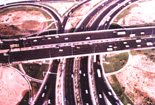
The Islamic Republic of Iran, given its superb geographical location in the Middle East and its situation on the "Silk Road, can turn into a main road of transactions between East and West Asia, as well as north of the Middle East to the heart of central Asia and trans-Caucasian. Transit of commodities is possible via Iran in the shortest period of time and by the minimum distance. This reality has been a good motivation for the countrys statesmen and economic planners in taking measures towards further expansion of the transportation network in the past few years. Fields both at present and in future. Meanwhile, building free ways, express ways and main roads in conformity with international standards, is of high importance.
In addition to the freeways, expressways, main and side roads which play an outstanding role in the countrys transportation system, provincial and rural side roads are also important links in the transportation of commodities and passengers at provincial level.
Performance of Road Building and Maintenance of National Axes(Km)
| Iran | 1988-94 | Annual average 1988-94 |
1995 performance |
1996 Forecast |
| Freeways. expressways (4 Lines) |
680 | 97 | 32 | 239 |
| Main side roads | 2808 | 401 | 1118 | 1115 |
| Rehabilitation of the roads |
3707 | 529.6 | 703 | 682 |
| Asphalt | 5146 | 735 | 1614 | 1700 |
[Introduction | Imposed War | Stability | Today | Culture & Art | Politics |
International Cooperation | Economy]